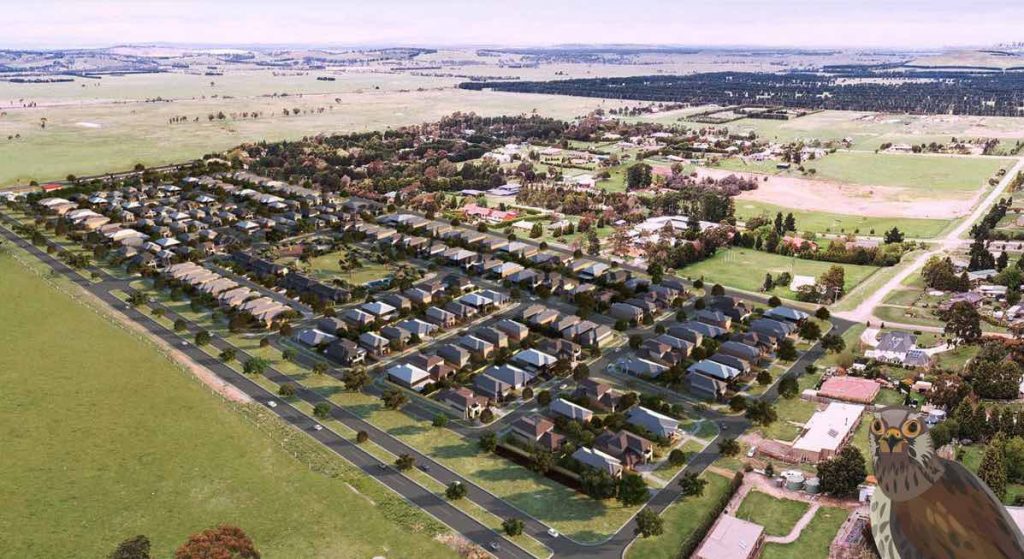
Overlooked by the picturesque Mt Fraser, Beveridge is a growing residential area in Victoria, Australia, located along the Hume Highway, 42 kilometres north of Melbourne. It is governed by the Mitchell Shire.
Beveridge was named after Andrew Beveridge, who established a hotel on the Sydney Road in the early 1840s.
Beveridge was named after Andrew Beveridge, who established a hotel on the Sydney Road in the early 1840s. The area was originally known as Mercer Vale, after a nearby pastoral run, but the popularity of the hotel rendered the original name redundant.
Beveridge is split between 2 municipalities, with the township and western rural area in the Shire of Mitchell and the eastern rural area in the City of Whittlesea. The explorers Hume and Hovell first viewed Port Phillip Bay from the Beveridge area in 1824. In the 1840s a number of large pastoral runs were established in the area.
Subdivision in the 1850s encouraged further settlement, including the establishment of the village of Merriang, about 5 kilometres east of Beveridge at the headwaters of the Merri Creek (1850-1920).
Merriang is thought to be Aboriginal for a stone chopper and the area east of Beveridge became known by this name. Changing agricultural activities in the late 19th century, including an expansion in grazing and a reduction in cropping, contributed to population decline.
By 1923, with the village of Merriang all but gone, the area’s postal address was changed to Beveridge, and the name fell into disuse.
Properties for sale in Beveridge – realestate.com.au & domain.com.au
Roofs can be prone to both internal and external issues. Our inspectors assess the interior cavity of the roof for insulation, framing and sarking problems, and the exterior of the roof for issues regarding tiles, gutters, downpipes, eaves, vents, and flues to identify any defects or damage.
Floors are a foundational element in houses and floor issues can create compounded problems. Our inspection will evaluate the floor for any issues regarding the framing, posts, stumps, ventilation and check for blocked vents, rising damp, surface water or dry rot.
Our inspection covers all of the internal rooms in the house, including the kitchen, living rooms, bathrooms, ensuites, bedrooms and hallways. Within these rooms, we hone in on the features like doors, windows, stairs, wardrobes, carpets and tiles, and storage spaces, because defects are common in these spots.
Outdoor spaces vary the most from one property to another but rest assured, we cover all the outdoor features on a property to assess for defects or damage. This might include patios, pergolas, shades, exterior stairs, garages and sheds, driveways, fences and paths. Then we turn our focus toward the technical aspects like walls, doors, windows, water systems and drainage, to ensure you’re not hit with any surprises down the road.